Utility disconnections are high-stress moments for customers and high-cost moments for business.
Customers had no digital path to restore service on their own.
The goal wasn’t just usability — it was operational reliability.
My Role
Led end-to-end design across product, engineering, business, and IVR stakeholders
Defined eligibility logic, customer messaging, and cross-channel flow sequencing
Owned usability testing strategy and synthesis
Facilitated cross-functional alignment with Legal and Compliance
Because this was a net-new self-service feature, the design strategy focused on creating a system that could scale safely and could balance customer clarity, operational trust and strict business rules across channels.
Each principle reflects deliberate tradeoffs between customer flexibility, operational risk, and regulatory requirements.
System Clarity
Complex rules and dependencies were distilled into clear, step-by-step flows without exposing internal complexity.
Channel-Agnostic Design
Reconnection logic was defined once and shared across web and IVR to ensure consistent eligibility decisions and outcomes.
Clarity Under Stress
The experience was designed for moments of urgency and anxiety, prioritizing accessibility and reduced cognitive load.
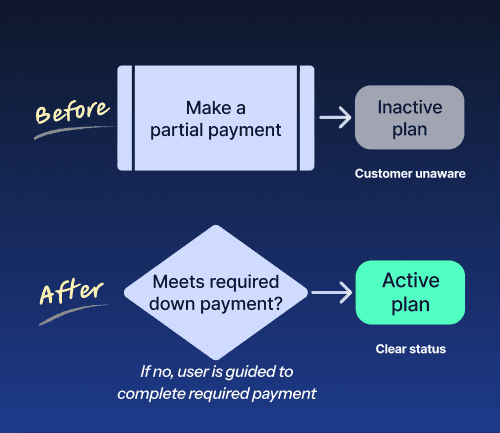
Balancing Flexibility with Guardrails
I partnered with business and product to map eligibility rules and risk scenarios, aligning on non-negotiable safeguards and safe simplifications.
Aligning Logic Across Web and IVR
I partnered with web and IVR teams to define shared decision logic, ensuring consistent outcomes while allowing each channel to adapt to its technical constraints.
Making Regulated Requirements Usable
I translated regulatory and legal requirements into plain language and validated comprehension through usability testing in high-stress scenarios.
Cross-Channel Process Alignment
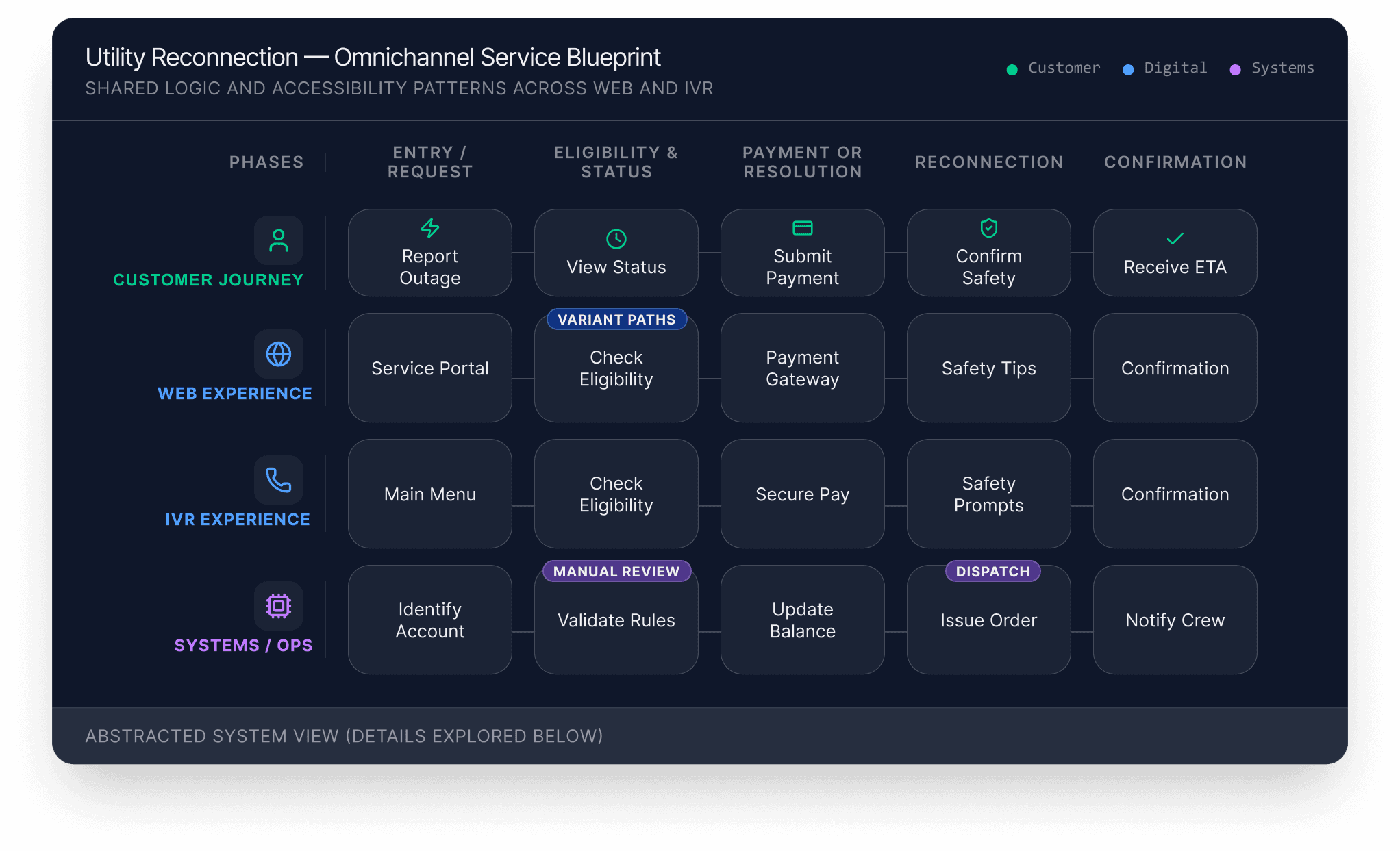
These flows translate complex, regulated decision logic into consistent customer journeys across web and IVR.
I designed separate but aligned process flows for web and IVR to ensure eligibility logic, decision points, and outcomes remained consistent across channels.
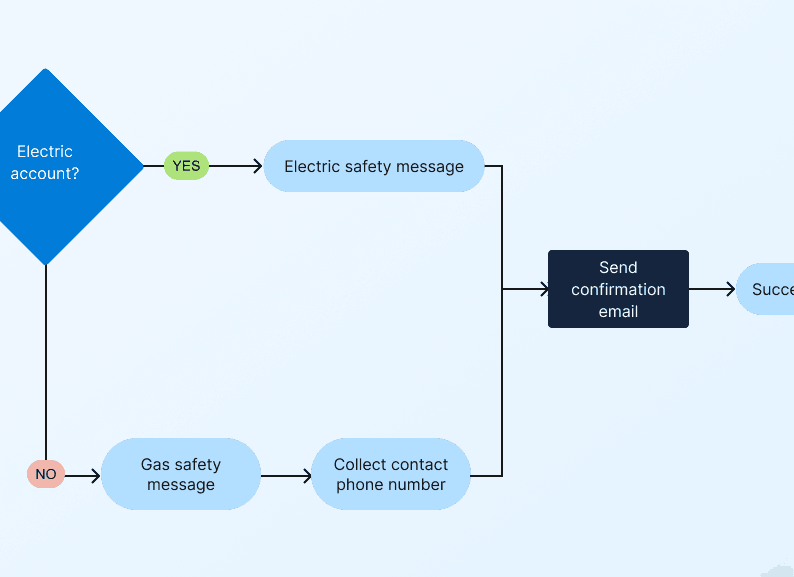
The visuals below highlight key decision clusters shared across both experiences.
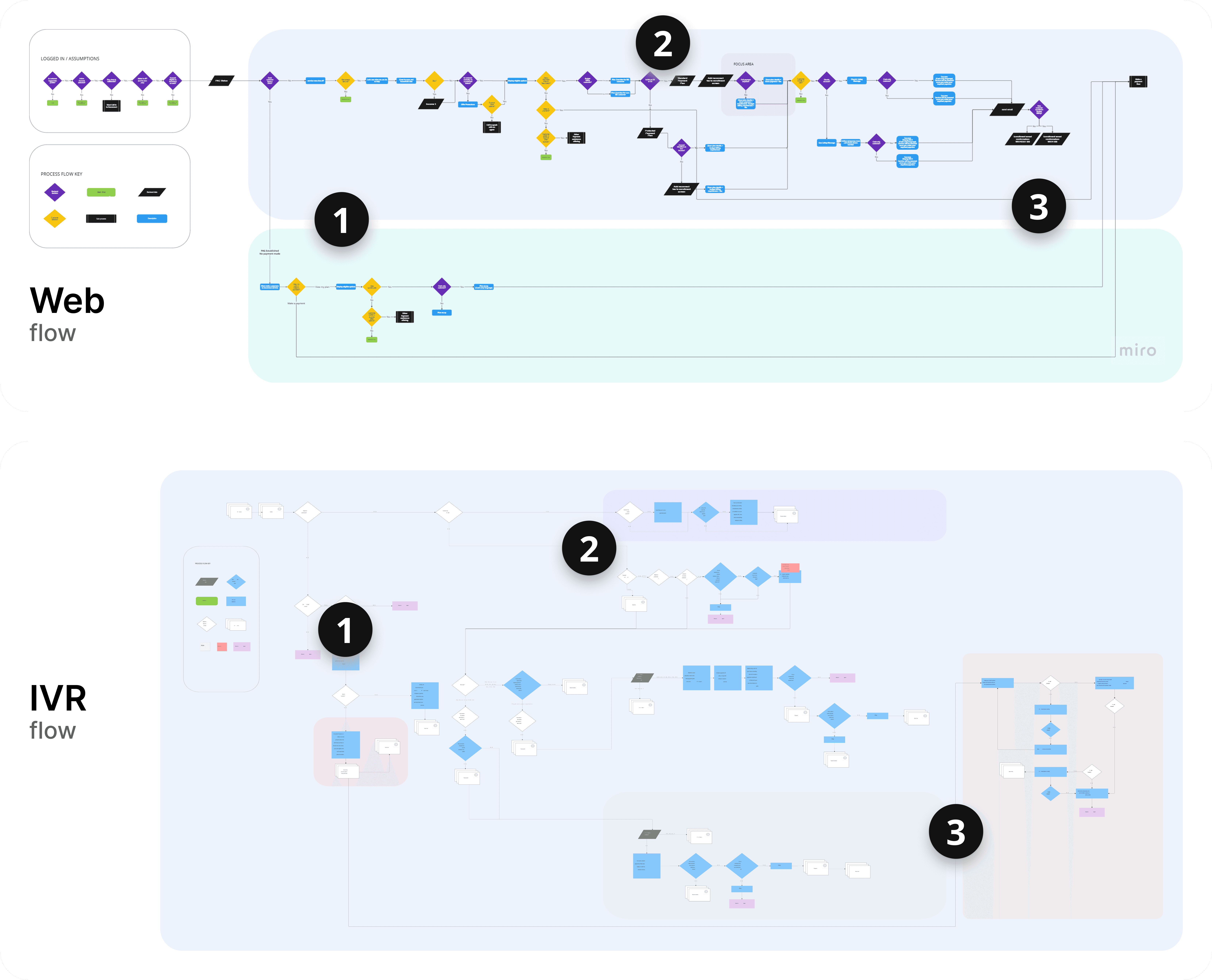
Eligibility Logic
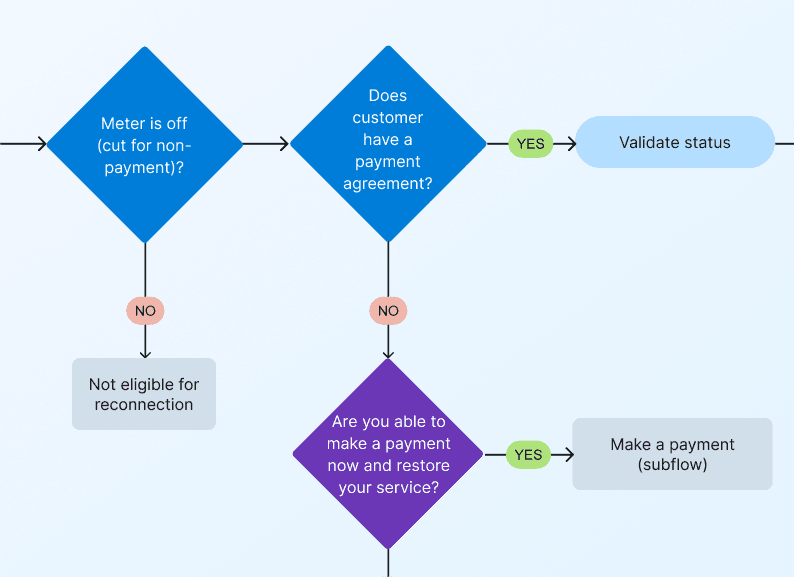
Financial Assistance Paths

3. Safety and Confirmation Logic
This project introduced the first self-service reconnection experience for utility customers — providing a clear, predictable path through a high-stress moment that previously required live agent support.
The work focused on system-level clarity, ensuring automation could scale safely without sacrificing trust, accessibility, or operational confidence.

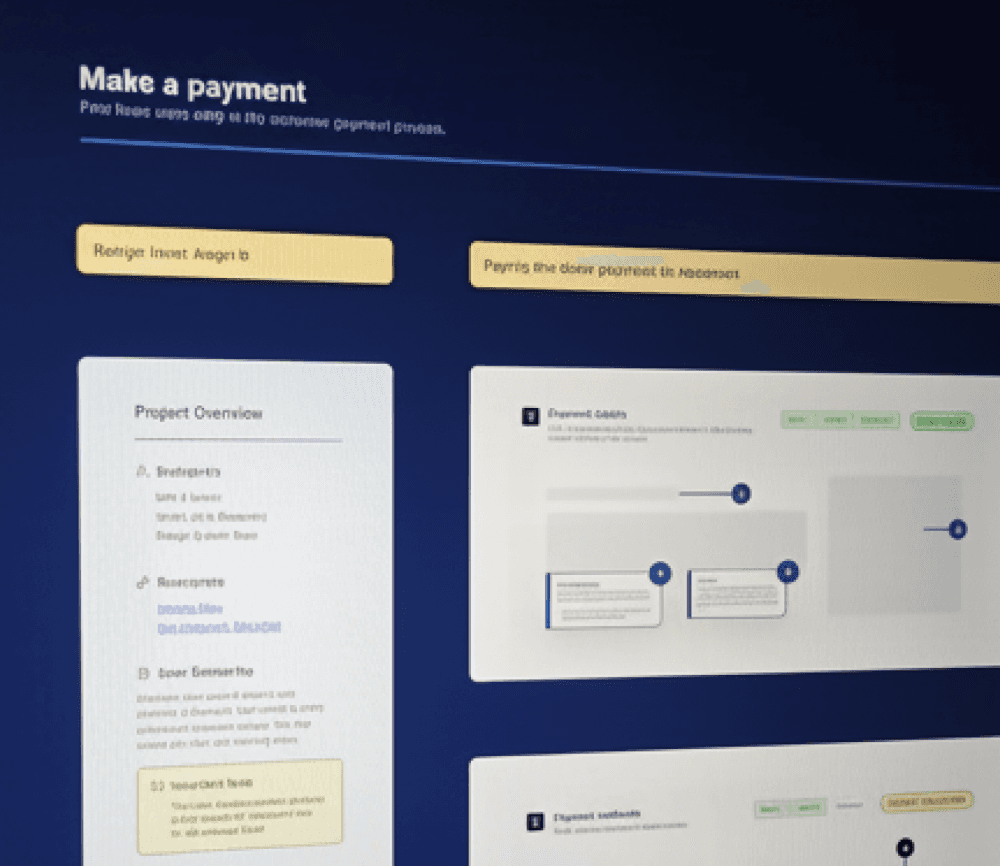
Simulated, simplified experience.
The final self-service experience translated complex, rule-driven logic into a clear, reassuring flow for customers.
Customer Impact
Business and Operational Impact
(Designed Outcomes)
Reflection
Designing for moments of vulnerability requires thinking beyond screens. This project reinforced that clarity in regulated systems comes from aligning logic and constraints first — interface clarity follows.