This experience supported customers managing payment plans in high-stakes financial situations, where clarity and correctness were essential.
Customer behavior data and stakeholder feedback revealed two consistent failure modes:
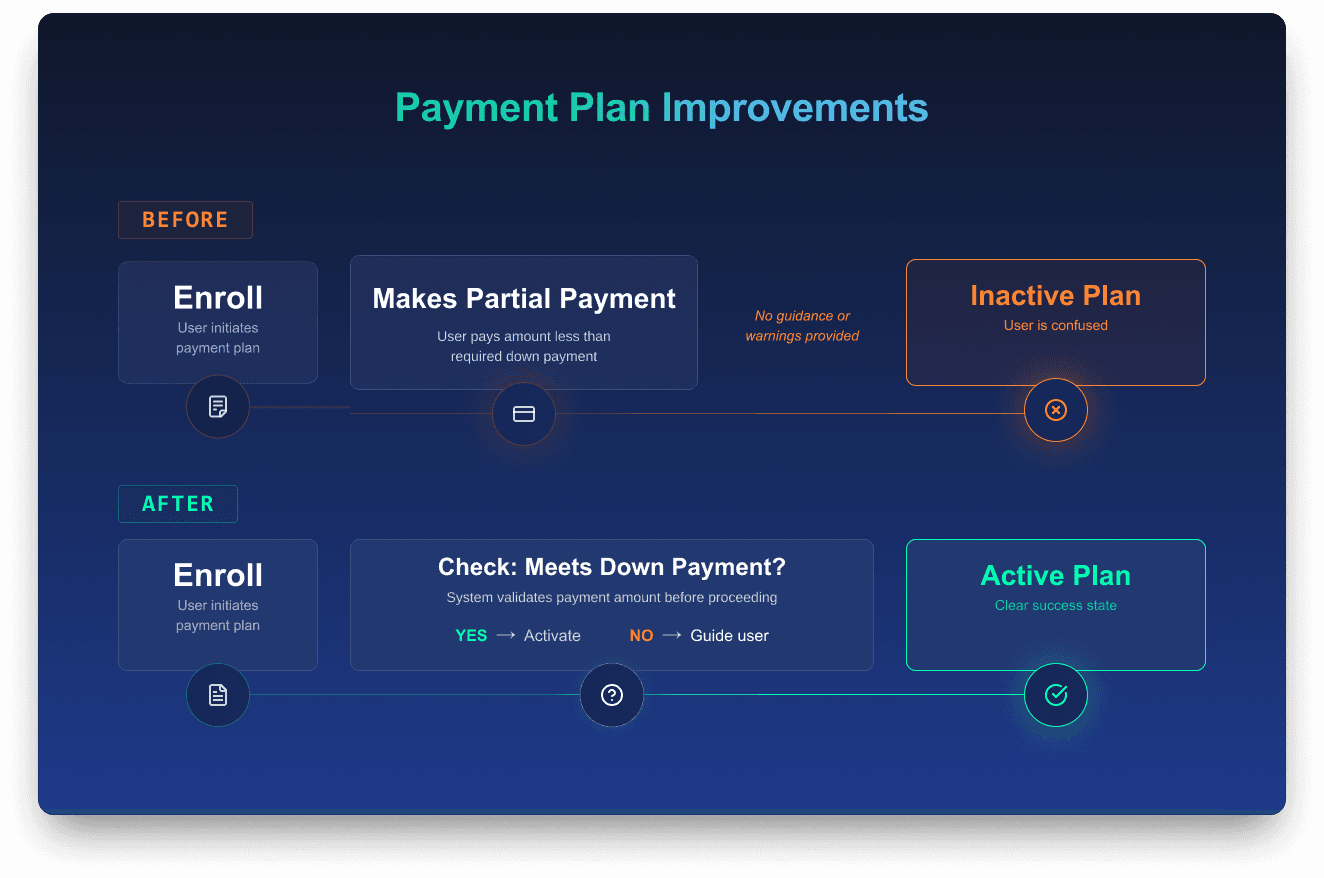
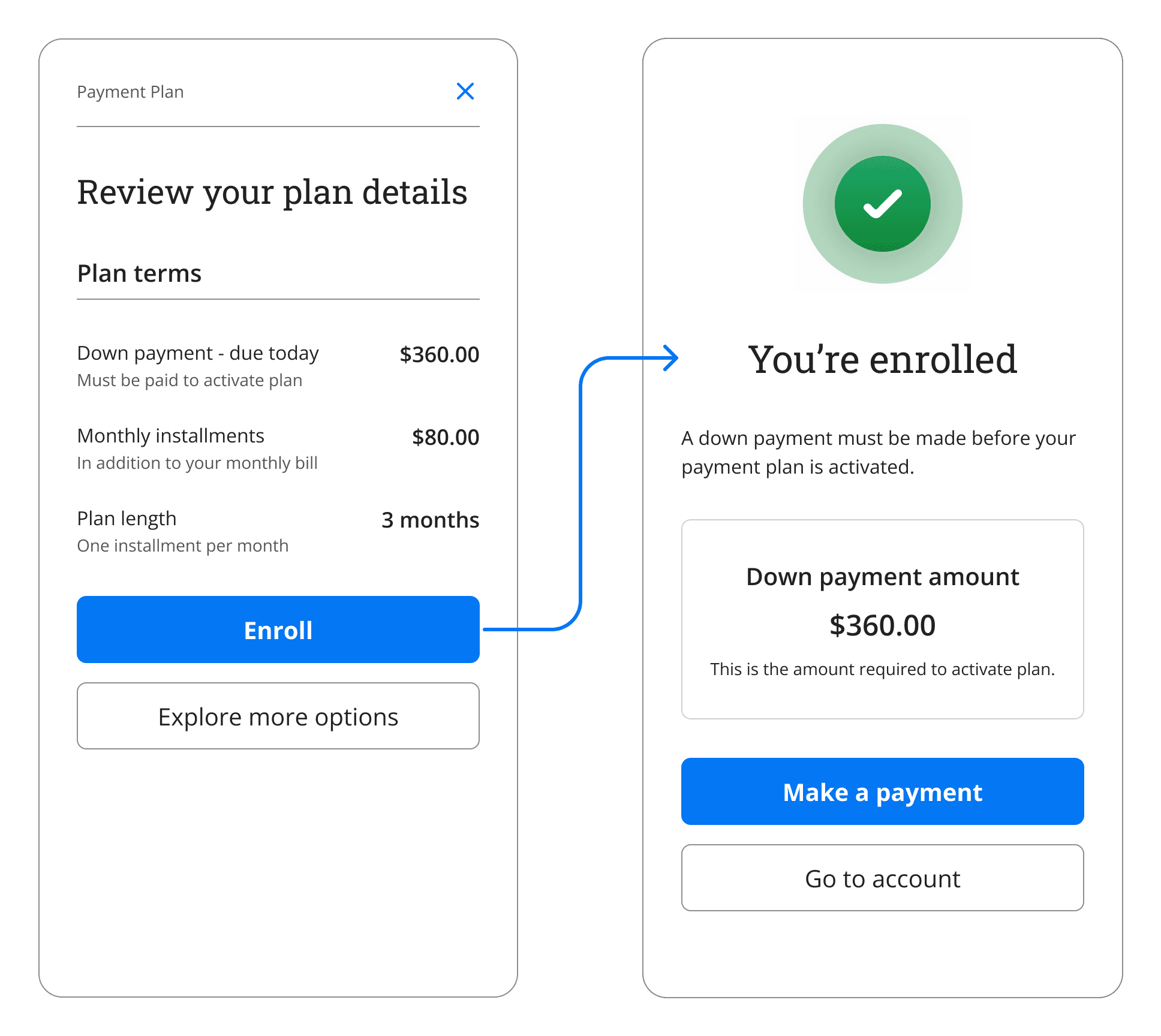
Users successfully enrolled in payment plans but often submitted payments that did not meet the required down payment amount
Despite incomplete activation, the experience confirmed “you’re enrolled,” creating false confidence
Customers believed their payment plan was active even though activation requirements were unmet
In both cases, users believed they had completed the process successfully, even though their payment plans were not active. An existing “Down Payment Due” section was already present in the experience, but it was not effectively guiding users toward the required next step.
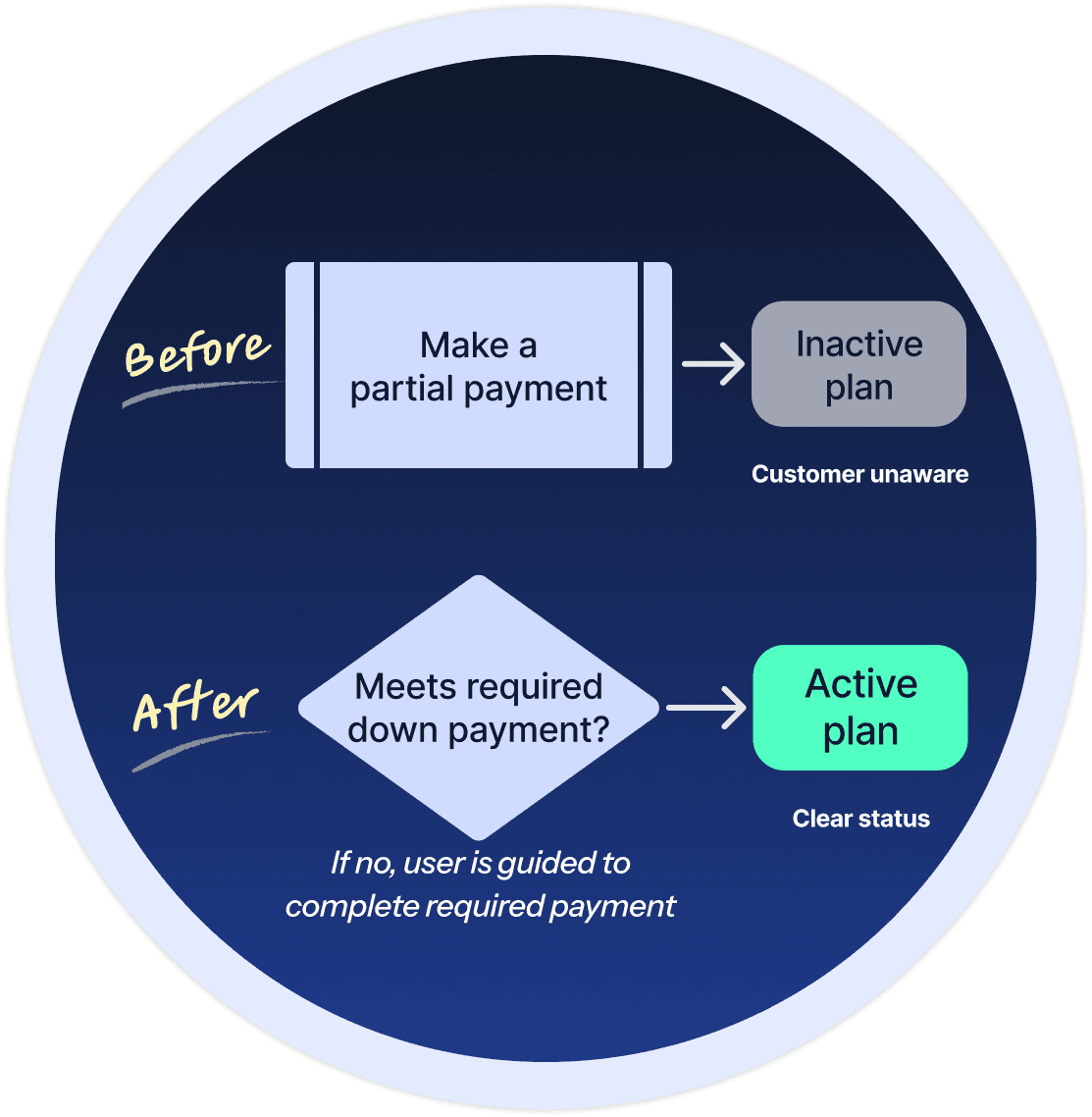
Before: Users could believe they were finished without paying.
Existing behavior data and stakeholder analysis indicated that the issue was not missing functionality, but misaligned guidance and hierarchy within the flow.
Enrollment and activation were treated as distinct system states but were not clearly differentiated in the UI
The down payment requirement lacked urgency, clarity, and contextual timing
The “Down Payment Due” component existed but did not effectively communicate that full payment was required to activate the plan
The flow allowed users to proceed without reinforcing the remaining requirement
Stakeholders hypothesized that confusion stemmed from flow sequencing, visual hierarchy, and messaging, rather than user error.
Based on observed behavior, we defined the following hypotheses:
The down payment requirement was surfaced too late and with insufficient emphasis
The experience allowed inactive states without clearly guiding users toward resolution
Users interpreted enrollment confirmation as completion, regardless of payment amount
Partial payments were not clearly communicated as insufficient for activation
Design Approach
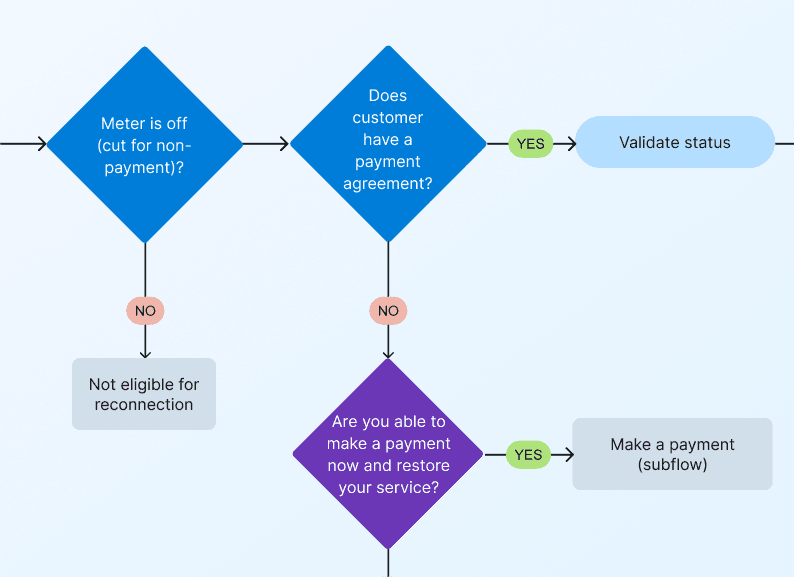
I approached this as a funnel correction and activation integrity problem, mapping the end-to-end experience across multiple entry points, including reconnection flows, payment assistance, account summary, and direct payment paths.
Key design interventions included:
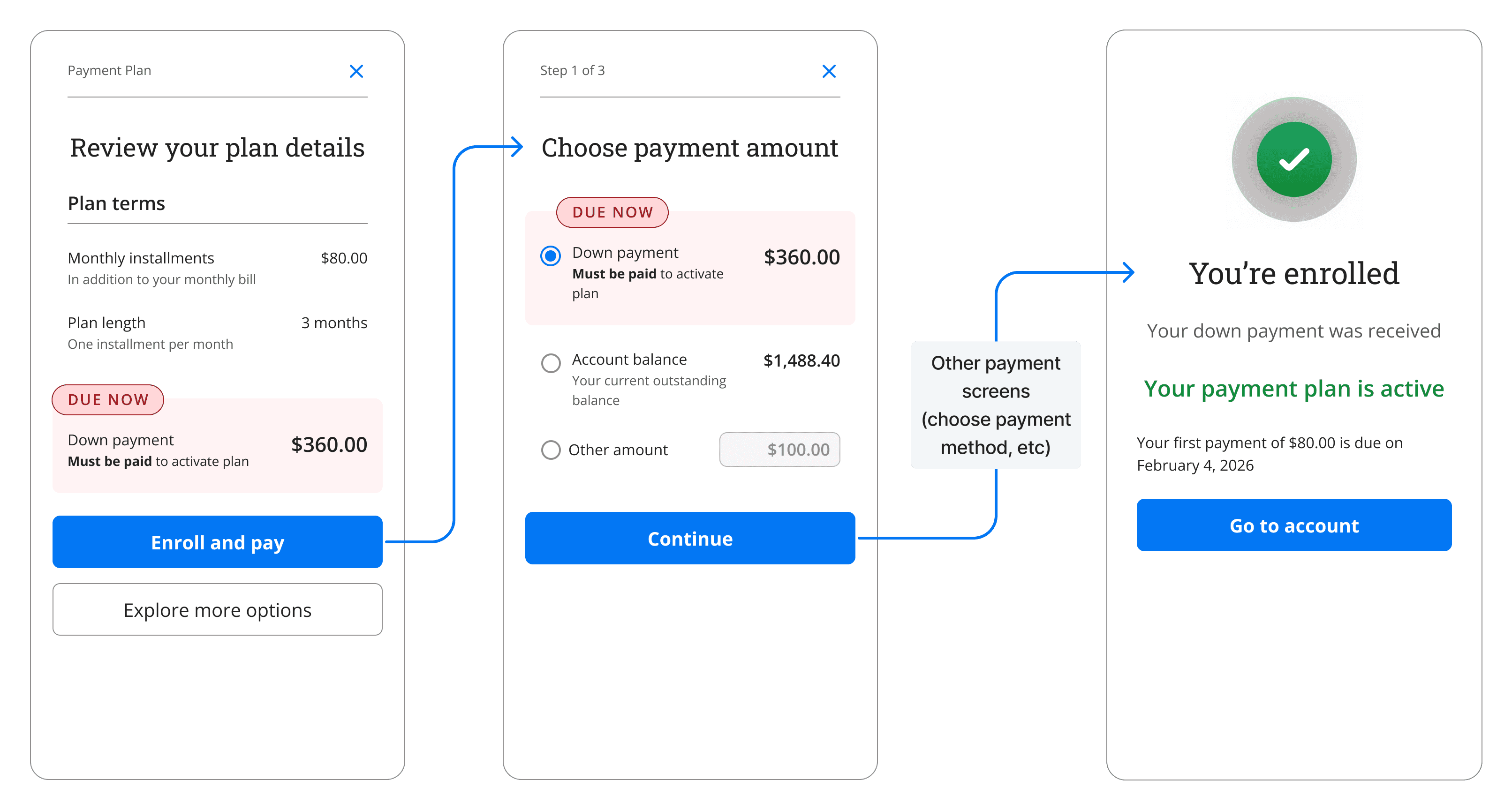
Reordering the flow to surface the down payment requirement immediately after enrollment
Clarifying copy to explicitly connect activation with meeting the full down payment amount
Redesigning and repositioning the “Down Payment Due” component to increase visibility and urgency
Reinforcing required next steps before allowing users to exit or assume completion
Ensuring consistent behavior, messaging, and logic across all entry points
The goal was to align system behavior with user mental models and prevent incomplete activation.
After: Customers can't reach the success screen without making the required down payment.
Execution & Collaboration
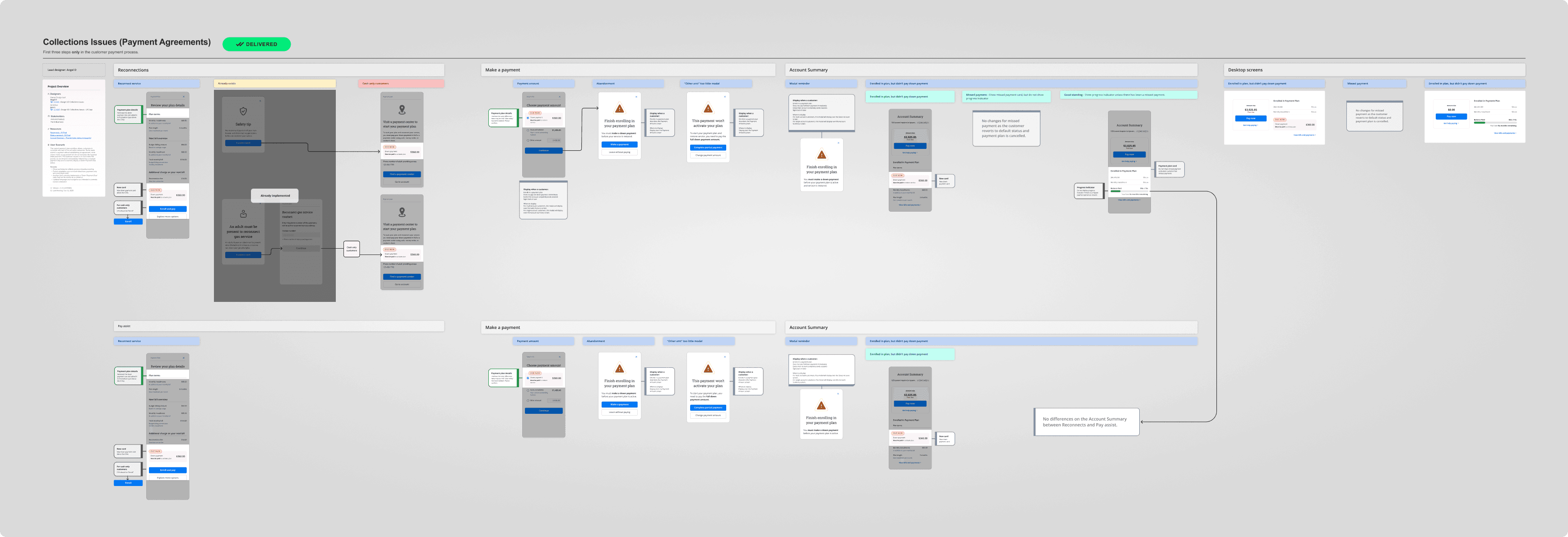
The final Figma file served as the single source of truth for:
Updated flows and screen states
Conditional logic and edge cases
Developer annotations and implementation notes
Supporting documentation for business stakeholders
I worked closely with product managers, engineers, and business partners to validate assumptions, address edge cases, and ensure the solution was feasible, scalable, and aligned with technical constraints.
Outcome
The redesigned payment plan activation flow was delivered in the fall of 2025. While precise quantitative metrics were not available, the solution eliminated known paths that allowed users to assume completion without meeting activation requirements.
Stakeholders expressed strong confidence in the updated experience, noting improved clarity, reduced ambiguity, and better alignment between system logic and user expectations in a high-stakes financial flow.
What I Learned
Small gaps in hierarchy and sequencing can create significant downstream confusion
Preventing invalid states is often more effective than recovering from them
Clear activation requirements are especially critical in financial and compliance-sensitive workflows
Well-documented, shared artifacts significantly improve cross-functional alignment
If iterating further, I would focus on instrumenting activation completion metrics and testing additional copy and hierarchy variations to further reinforce correct behavior.
My Role
Cross-functional collaboration with Product, Engineering, and Business
Delivery of production-ready designs and documentation
Behavioral analysis and hypothesis generation
End-to-end product design for a multi-step payment plan activation flow
Flow restructuring, interaction design, and visual hierarchy